

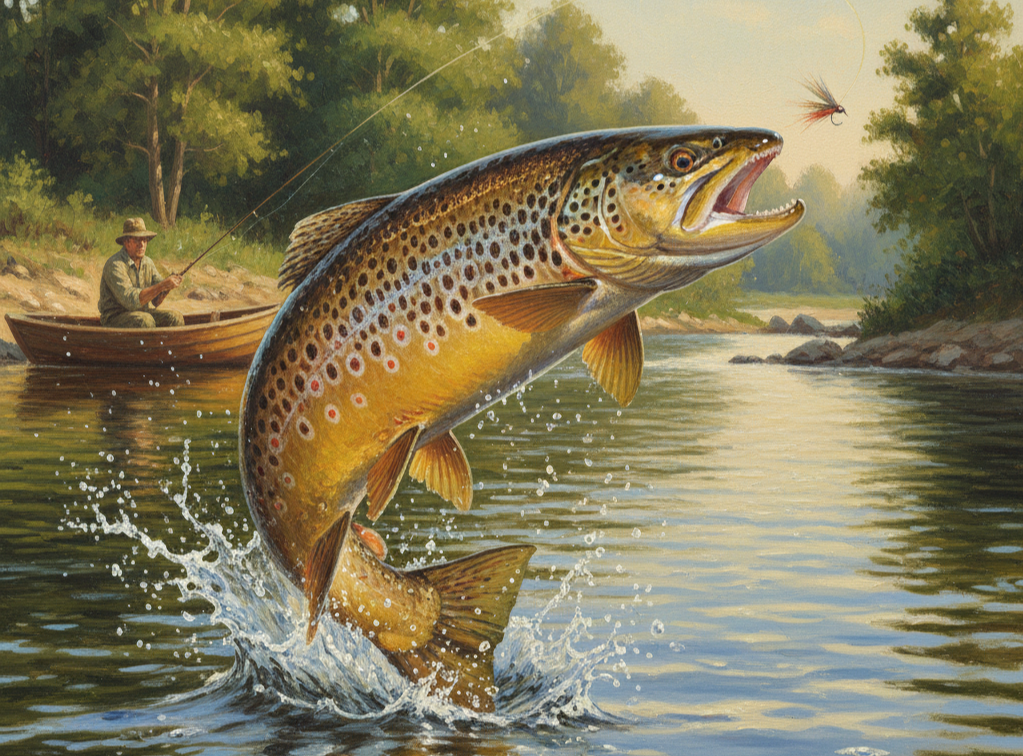
Brown Trout
At FML, we specialize in stocking Brown Trout that are prized for their legendary cunning, buttery-gold brilliance, and predatory vigor. When FML stocks these elite-performance fish, we introduce a level of sophistication to your fishery that challenges even the most seasoned anglers. Known for their wariness and intelligence, Brown Trout provide a strategic 'chess match' on the water; they are famous for utilizing structure and hunting larger forage, making them the ultimate prize for those seeking a 'wild' fishing experience.
Our FML-sourced Browns are exceptionally hardy and adaptable, often demonstrating a higher tolerance for slightly warmer water and lower oxygen levels than other trout species. This resilience makes them a versatile choice for a variety of Western habitats—from deep, structured ponds to complex river systems. While they are a more elusive species, the inclusion of Brown Trout elevates the prestige of any private water. By choosing FML Brown Trout, property owners invest in a high-status, long-lived predator that adds depth, mystery, and a lasting trophy legacy to their personal fishing destination.
Best Applications for Brown Trout
-
If your goal is to provide a challenge for experienced fly fishermen, Brown Trout are the gold standard. Their natural wariness and tendency to "spook" easily require better casting and stealth, making every successful landing feel like a hard-earned victory.
-
Unlike Rainbows, which often cruise open water, Browns are "homebodies" that love structure. They are the perfect application for ponds or streams with submerged logs, rock piles, or undercut banks. They turn your pond’s "dead zones" into high-value ambush points.
-
Brown Trout are famously more tolerant of slightly higher water temperatures and lower dissolved oxygen levels than Rainbows or Brookies. This makes them a superior choice for lower-elevation ponds or regions in the Great Plains where summer water temperatures can become a stressor for other trout.
-
As Browns mature, they transition from eating insects to eating other fish. If you have an overabundance of minnows or small forage fish, stocking Browns is a "biological tool" to keep your ecosystem balanced while growing massive, high-protein trophies in the process.
-
For property owners looking to create a diverse "Rockies Grand Slam" experience, the Brown Trout provides the necessary contrast to the Rainbow. Their buttery-gold color and unique spots provide incredible variety for photography and angler satisfaction.
Fast Facts
-
Brown Trout prefer the shadows and structure, staying mostly near the bottom or under cover until they come out to hunt at dawn and dusk.
-
Widely considered the "smartest" trout, they are wary and offer a great challenge for anglers who enjoy a strategic fishing experience.
-
Ideal Temp Ranges from 44°F–67°F.
-
While they grow more slowly than Rainbows initially, they live longer and eventually reach massive "trophy" sizes by preying on minnows and crawdads.
-
A rugged and versatile choice for any private pond or stream across CO, WY, NM, NE, KS, and OK.
Native to the cold-water rivers and lakes of Europe and Western Asia, the Brown Trout (Salmo trutta) is the cornerstone of the Atlantic salmonid family. While Rainbow Trout belong to the Pacific genus, the Brown remains firmly in the Salmo genus, making it a closer relative to the Atlantic Salmon. The species has been prized by anglers since the Roman Empire, but its American history officially began in 1883.
Following successful efforts by New York fish culturist Fred Mather, the first shipment of "German Brown Trout" eggs arrived from Baron Lucius von Behr. These fish were first released into Michigan's Pere Marquette River in 1884, and their superior resilience soon saw them transported by railcar across the continent. By the early 1900s, Browns had established themselves in the Rockies and Great Plains, proving they could thrive in habitats where native trout struggled. Today, the Brown Trout is respected globally as a master of its environment, celebrated for its ability to grow into a formidable, long-lived predator that maintains its wary, "wild" nature in any water it calls home.
Brown Trout History
To learn more about the biology and habitat of the Salmo trutta, visit the Colorado Parks and Wildlife Profile.